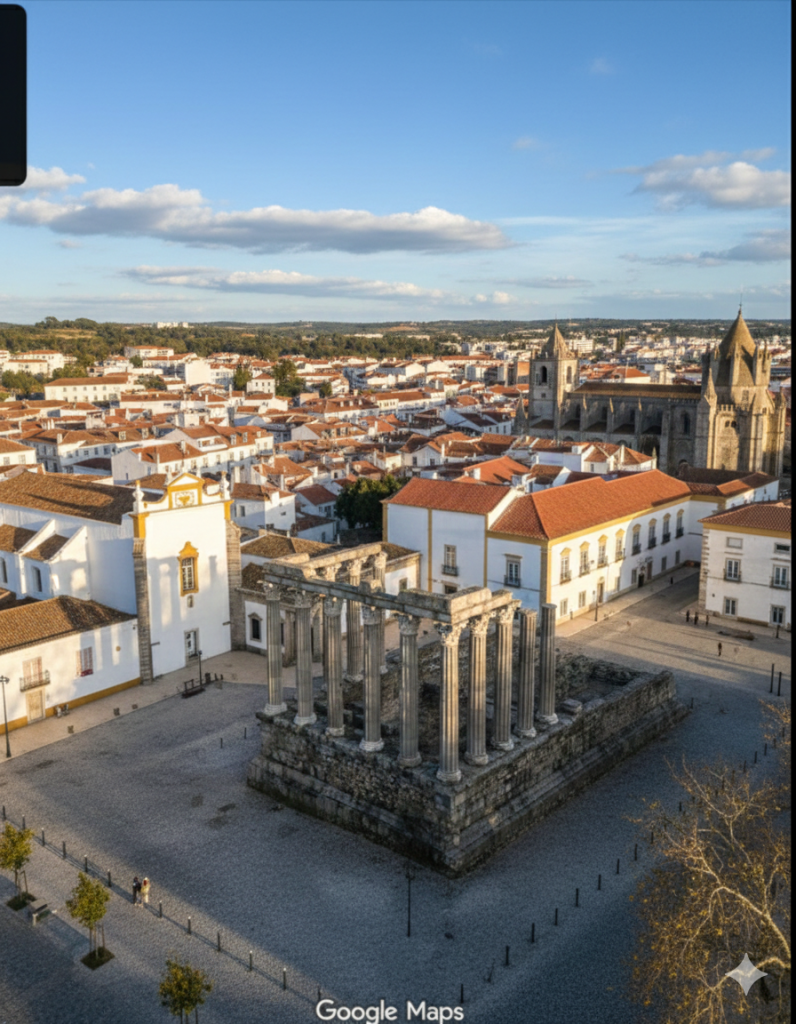
2nd Century Roman Temple
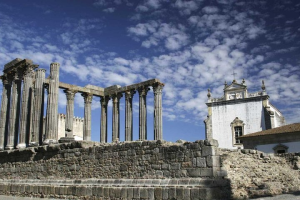
The Roman Temple of Évora (often mistakenly called the Temple of Diana) is one of the most significant and well-preserved Roman landmarks in the Iberian Peninsula. Located in the historic center of Évora, Portugal, it is a stunning example of Corinthian architecture.
Note: While local legend attributed the temple to the goddess Diana in the 17th century, archaeologists believe it was actually dedicated to the Imperial Cult (the Roman Emperor).
Roman Temple Key Highlights [Read More]
Praca Giraldo and Renaissance Marble Fountain
Praca Giraldo
Praca Graldo Stories [ Read More}
A Taste of Alentejo: Where Flavors Tell the Story of a Land
Savory Staples That Speak of the Land
Food is just one way the Alentejo expresses its deep cultural identity. Time permitting, your culinary exploration may include encounters with
Beyond Evora - Some of the Alentejo Region's Other Place to Visit.
While Évora is the crown jewel, the surrounding Alentejo is dotted with other historic treasures important for any itinerary. To the east, hilltop “sky fortresses” like Monsaraz and Marvão cling to rocky cliffs overlooking the Spanish border, offering breathtaking panoramic views of the plains. For those interested in heritage crafts, the village of Arraiolos is world-renowned for its hand-stitched wool rugs, while Vila Viçosa and Estremoz showcase the region’s “white gold”—shimmering local marble used in everything from magnificent palaces to the Marble Tower of Estremoz. History buffs should also seek out the Cromeleque dos Almendres, a megalithic complex older than Stonehenge located just outside Évora. For a complete contrast, the Alentejo Litoral (the coast) offers a wilder experience; unlike the developed Algarve, this rugged shoreline features hidden coves, dramatic cliffs, and unspoiled beaches like those in Vila Nova de Milfontes and Zambujeira do Mar, proving that the Alentejo truly holds the authentic, unhurried soul of Portugal.