On Faial Island in the Azores, you’ll find a mix of raw volcanic landscapes, dramatic coastal viewpoints, and a lively marina‑front capital in Horta that feels both relaxed and cosmopolitan. This guide walks you through the island’s standout sights, viewpoints, beaches, and town highlights, plus the food, drink, culture, and souvenirs that make a stay here feel truly local.
Most visited natural sights

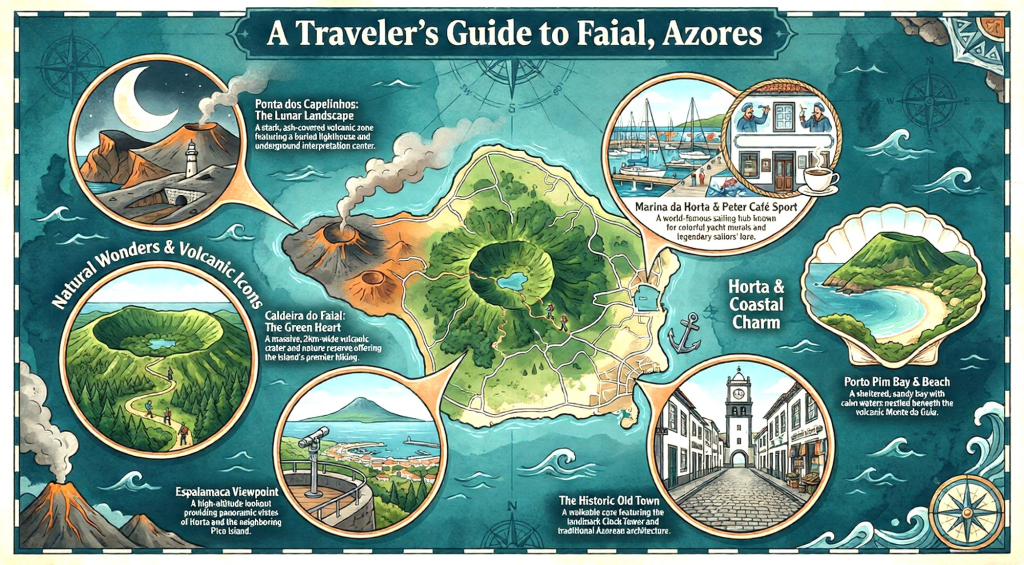
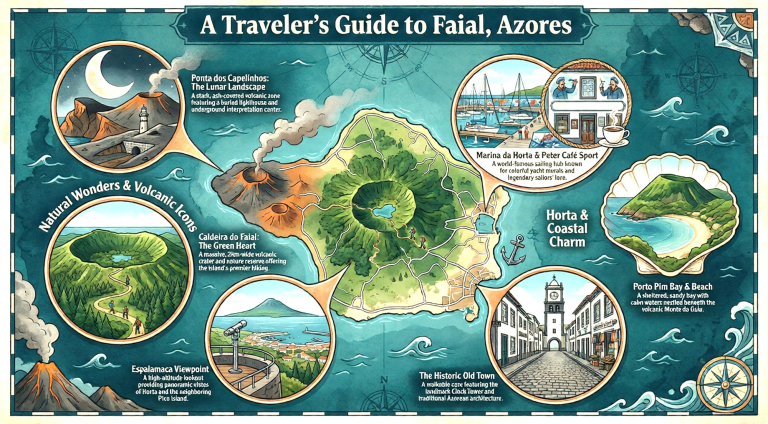
Ponta dos Capelinhos is the island’s most iconic stop: a stark, lunar‑style volcanic zone created by the 1957–58 eruption, anchored by the old lighthouse and the Capelinhos Volcano Interpretation Centre, where exhibits walk you through the eruption and the island’s geological story.
Caldeira do Faial is a wide volcanic caldera and protected reserve threaded with trails that lead through native Azorean forest; it’s one of the island’s standout hikes and a great place to feel the scale of Faial’s volcanic past.
Monte da Guia is a compact volcanic cone linked to Horta; hiking to the top rewards you with wide‑ranging views over Porto Pim Bay and the marina, while its lower slopes cradle the popular Porto Pim Beach below.
Porto Pim Bay and its beach are a prime spot to swim and unwind, with calm, transparent waters and a long stretch of sandy‑pebble shore nestled between Monte da Guia and the sea.
Almoxarife Beach and the surrounding coastal pools – such as those near Varadouro or Porto do Salão – are ideal if you want to swim and snorkel in natural seawater basins away from the main crowds.
Top coastal viewpoints on Faial

Espalamaca Viewpoint (Ponta da Espalamaca / Nossa Senhora da Conceição) is one of those places you’ll want to visit at least once: the wide‑angle views across Horta, Monte da Guia, and Pico Island make it a natural stop on any short stay.
Ponta dos Capelinhos unfolds as a dramatic coastal zone centered on an old lighthouse and the new land formed by the 1957–58 eruption; it’s one of Faial’s most striking viewpoints and a must for anyone interested in geology and maritime history.
The Ponta da Ribeirinha lighthouse and the Boca da Ribeira area are perfect if you love rugged coastlines; their cliffs and open‑ocean views regularly show up on “best sights” roundups for good reason.
Best beaches and swimming spots on Faial
Porto Pim Beach is a favorite cove with clear, gentle waters and a mix of sand and small stones, ideal if you want to swim, sunbathe, or simply sit with a drink and watch the boats come and go.
Praia de Almoxarife is a quieter alternative, especially good for swimming and snorkeling if you’re after a more low‑key stretch of coast.
Varadouro Natural Pools are a series of seawater basins carved into volcanic rock, great for safe, family‑oriented swimming and a refreshing dip after a day of exploring.
Porto do Salão offers a rougher, more dramatic coastal experience, with natural pools that feel wilder and less polished than the island’s main sandy beaches.
Sights in the main town (Horta)

Horta is Faial’s capital and main tourism hub, and the best way to get to know it is simply to wander: walk along the marina, duck into small shops, and let yourself get drawn into the rhythm of the town.
Marina da Horta and Peter Café Sport are two of the town’s most distinctive spots; the marina is famous for its colorful yacht murals, and the bar is a legendary sailors’ hangout where you can sip a drink and listen to stories of Atlantic crossings.
São Salvador Church (Igreja Matriz) and Nossa Senhora do Rosário Church are historic churches that give you a sense of Horta’s older, more traditional side, especially if you take a moment to pause and look at their architectural details.
The Clock Tower (Torre do Relógio) and the surrounding historic streets form a compact, pedestrian‑friendly zone that captures Horta’s classic Azorean character and makes for an easy evening stroll.
Faial Botanical Garden (Jardim Botânico do Faial) is a peaceful green space that showcases the island’s native flora and offers a quiet break if you’ve been hiking or sightseeing all day.
Forte de Porto Pim and the nearby seaside promenade make up a small fort and waterfront area that pairs naturally with a visit to Porto Pim Beach, whether you’re there for the history or just the views.
Food, drink, culture, and souvenirs on Faial

On Faial, meals tend to be hearty and rooted in the sea and the land. Look out for caldeirada (fish stew), caldo de peixe (fish soup), arroz de lapas (limpet rice), and linguiça com inhames (sausage with yams), as well as molha de carne (marinated beef stew) and morcela de porco (blood sausage), especially at local festivals.
Seafood lovers will want to try lobster, cavaco (a smaller lobster‑like crustacean), and other deep‑water crabs, usually grilled or simply seasoned so the natural flavor shines through.
For dessert, seek out fofas do Faial, a light, fluffy pastry unique to the island, and local queijo da ilha (island cheese) served with bread or fruit.
Faial’s culture is deeply tied to the sea, with a legacy of whaling, sailing, and aviation history that you’ll hear in local stories, see in small museums, and feel in the maritime‑themed bars around Horta. Traditional fado and other music often fill the evenings, especially in places that attract sailors and long‑term visitors.
If you’re looking for souvenirs, consider local cheeses, jams, liqueurs, and wines, as well as handicrafts made from fig‑tree kernels, basketry, scrimshaw, and artisanal tuna products sold in Horta’s shops and markets.
Recommended Restaurants, Bars and Pastry shops our readers have recommended. ( we’re not affiliated with these establishments)
Doce Delicia: Rua Conselheiro Miguel da Silveira Nº 26, Horta, Faial Island 9900-114 Portugal
Doce Delícia is a Pastry Shop and Snack that offers a welcoming space for the whole family. We offer a varied menu of homemade desserts, traditional delicacies and sweet specialties from the Azores, snacks, pizzas, hamburgers, various soups and light meals.
Principe Gastro Bar: Estrada Principe Alberto do Monaco, Horta, Faial Island 9900-038 Portugal
Gastrobar with a lighthearted, friendly atmosphere and with a young-blooded menu composed by our international chefs)
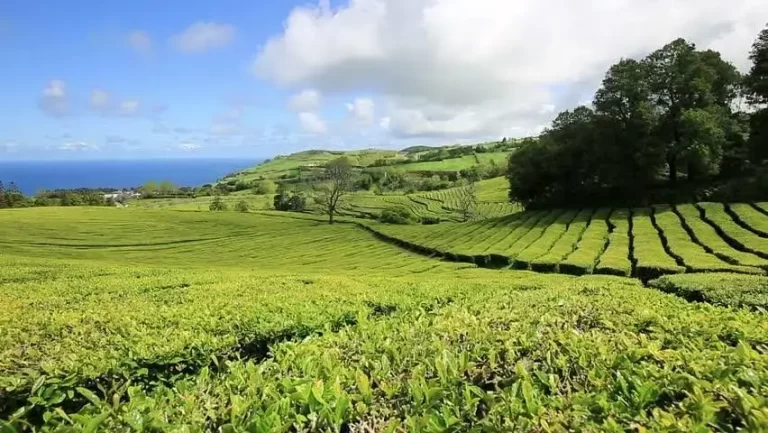
See our blog posts for São Miguel , Pico’s Volcanic Vineyards, and São Miguel’s Tea Plantations
If you’re planning to visit other Azorean islands, you’ll also want to explore our dedicated posts on São Miguel, Pico, and São Jorge, which cover additional coastal viewpoints, beaches, natural pools, and local flavors.
São Miguel – food, drink, traditions, and culture
On São Miguel, cozido das Furnas is a must‑try: a meat and vegetable stew slow‑cooked underground using volcanic heat, often served in a large communal pot.
You’ll also encounter sopas do Espírito Santo (Holy Ghost soup), local cheeses, pineapple‑based desserts, and sweets like massa sovada (sweet bread) and queijadas, which pop up at bakeries and family‑run cafés.
The island’s Holy Ghost festivals, bull‑ring events, and village processions are central to local life, especially in summer, when music, communal meals, and religious celebrations bring communities together.
Pico – food, drink, traditions, and culture
Pico’s food leans on fresh fish, fig‑based products, and local brandies distilled in old copper stills, often enjoyed as digestifs after a long meal.
Traditional sweets such as massa sovada, rosquilhas, vesperas, and arroz doce are linked to the Holy Spirit Festivals, while carnival‑time treats like filhoses, coscorões, and sonhos appear in bakeries and home‑kitchens.
The island’s UNESCO‑listed vineyard landscape and whaling history shape its cultural identity; wine‑tasting experiences, small museums, and coastal‑vineyard walks give you a strong sense of how people live and work here.
São Jorge – food, drink, traditions, and culture
São Jorge is best known for its famous São Jorge cheese, a semi‑hard cow’s‑milk cheese with a distinctive flavor that you’ll find on cheese boards, in sandwiches, and in local dishes.
Meals often feature beef, pork, and fresh fish, served with corn bread and seasonal vegetables, while sopas do Espírito Santo and sweet pastries mark religious celebrations and family gatherings.
The island’s whaling heritage, dairy‑farming culture, and small‑village festivals give visitors a strong sense of rural Azorean life, with music, storytelling, and communal feasts playing a central role in everyday life.
Tours to Fail Island are great ways to maximize your time on the island and orient yourself to what the island offers. We recommend these tours from partners in Faial Island:
Faial Half Day Private Tour and Faial: Private 4WD Half Day Island Tour with Local Guide

.jpg)