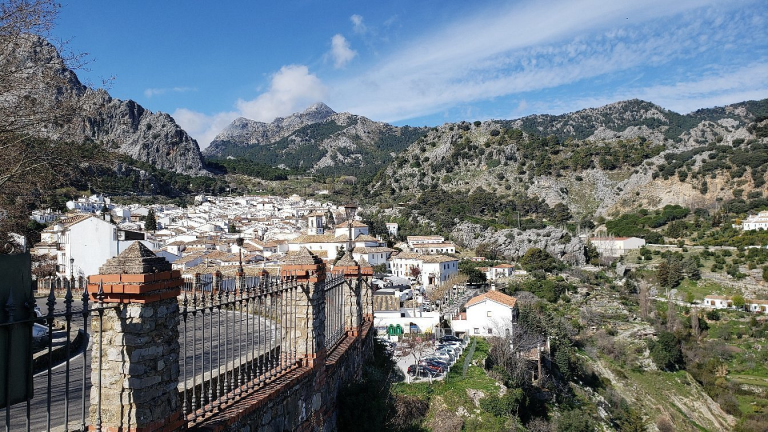
After spending time exploring Andalusia’s White Villages, one place kept pulling me back for “just one more photo.” That place was Grazalema, located high in the mountains of Andalusia in the Sierra de Grazalema Natural Park (often referred to as a forest or reserve), famous for its rugged limestone mountains and “white villages” (pueblos blancos), it is home to the Pinsapar, the world’s most extensive surviving forest of the rare Spanish fir, surrounded by dramatic limestone peaks, deep valleys, and some of the most beautiful scenery in southern Europe, sits the white village of Grazalema in Cadiz Province of south western Spain and the Atlantic Ocean.
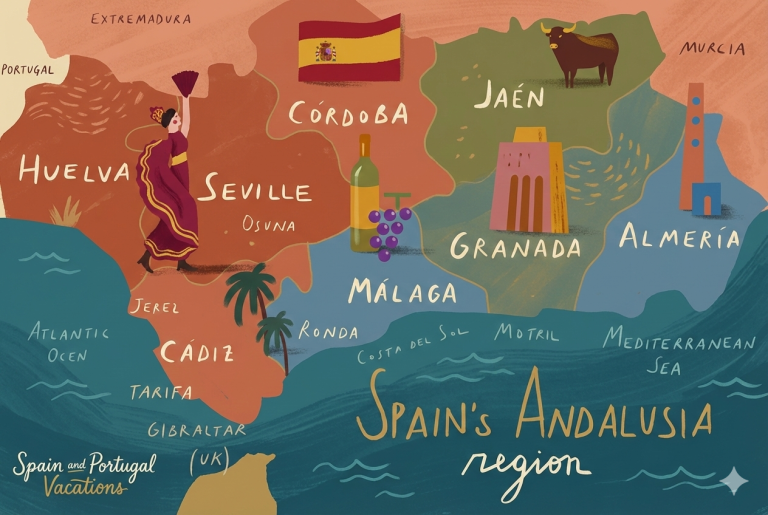
Most visitors to Spain have heard of Seville, Granada, Córdoba, and Málaga.
Far fewer have discovered Grazalema, one of Andalusia’s most beautiful and authentic White Villages.
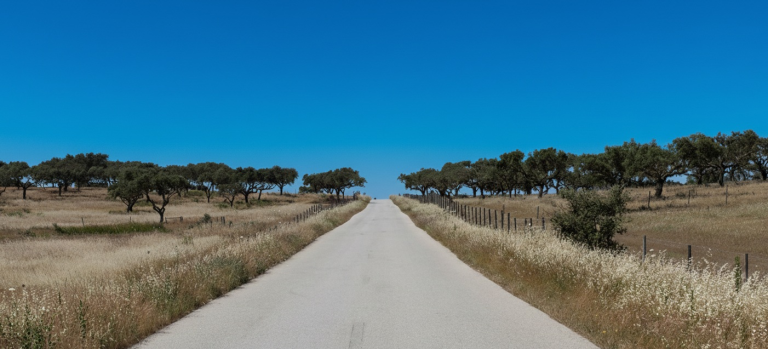
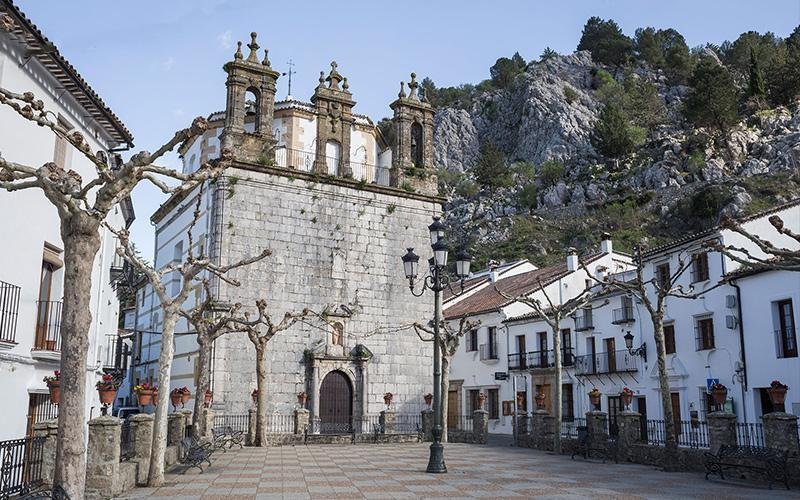
Part of Andalusia’s famous White Villages Route, Grazalema is often considered one of the most picturesque villages in Spain. As you approach, the village appears almost suspended between the mountains and the sky. Whitewashed homes cascade down the hillside while church towers rise above a maze of narrow cobblestone streets decorated with flower-filled balconies and colorful pots.The first thing I noticed wasn’t the village itself—it was the mountains. As the road climbed higher into the Sierra de Grazalema, the landscape changed dramatically. Limestone cliffs rose from the valleys, cork oak forests covered the hillsides, and around each bend another view opened up that made me slow the car down.
Then Grazalema appeared from a distance, the village looks as if someone carefully placed hundreds of white houses against the mountainside. Up close, the details begin to emerge. The walls are so bright in the afternoon sun that sunglasses become almost essential. Flower pots spill geraniums and bougainvillea from balconies. Church bells drift across the rooftops. Even the sound of footsteps changes here, echoing softly off stone walls and centuries-old cobblestones.
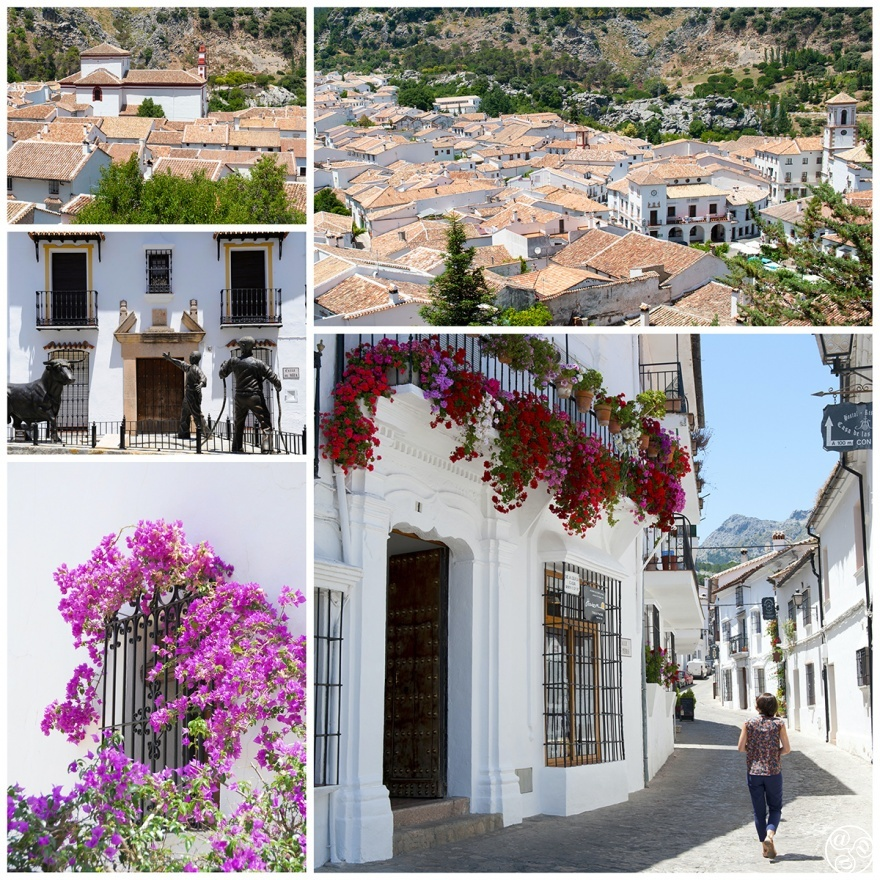
Walking through the historic center, I found myself constantly looking up. Narrow streets frame views of mountain peaks at the end of nearly every lane. Laundry hangs between buildings. Iron balconies cast intricate shadows on white facades. Small cafés spill onto plazas where conversations seem to move as slowly as the afternoon.
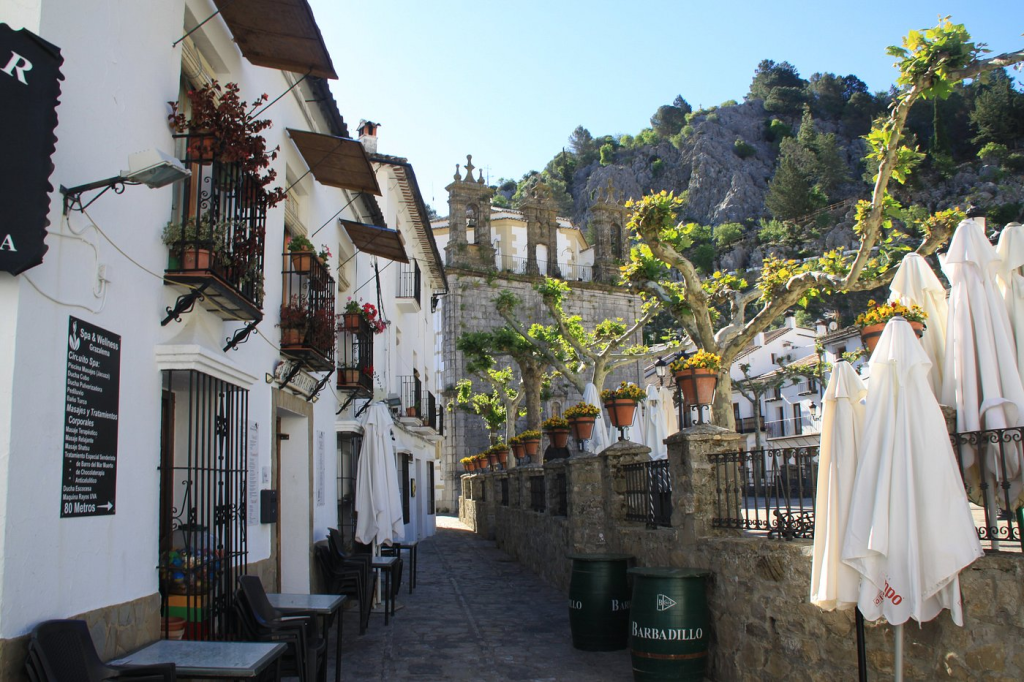
Among the whitewashed lanes of Grazalema, one of the most photographed streets is Calle Las Piedras, where rows of flower pots hang from bright white walls, creating splashes of red, pink, and purple against the limestone backdrop. The narrow street curves gently uphill, drawing visitors deeper into the historic center while framing views of balconies draped with geraniums.
The street is particularly striking in the morning when sunlight reaches the upper façades first, leaving the lower cobblestones in cool shade. The contrast makes the flower pots appear almost suspended in midair. During the warmer months, the scent of damp stone lingers after residents water their plants, and small rivulets often trace paths between the uneven cobbles.
Like much of Grazalema, Calle Las Piedras reflects the village’s long tradition of decorating public-facing walls with potted flowers. Rather than formal gardens, these displays are woven directly into daily life. Clay pots hang beside doorways, beneath wrought-iron window grilles, and along stair-stepped alleys where neighbors pause to exchange greetings.
One of my favorite moments came in Plaza de España. Sitting beneath the shade of old trees, I could hear the gentle splash of the fountain while locals greeted each other by name. There was no rush. No urgency. Just everyday life unfolding in a setting that seemed untouched by modern trends.
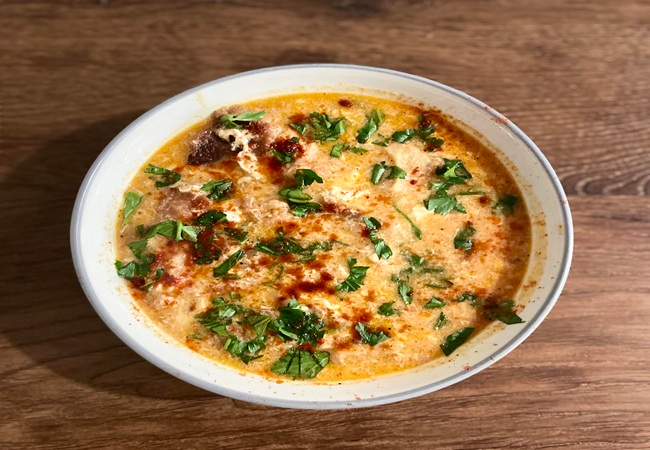
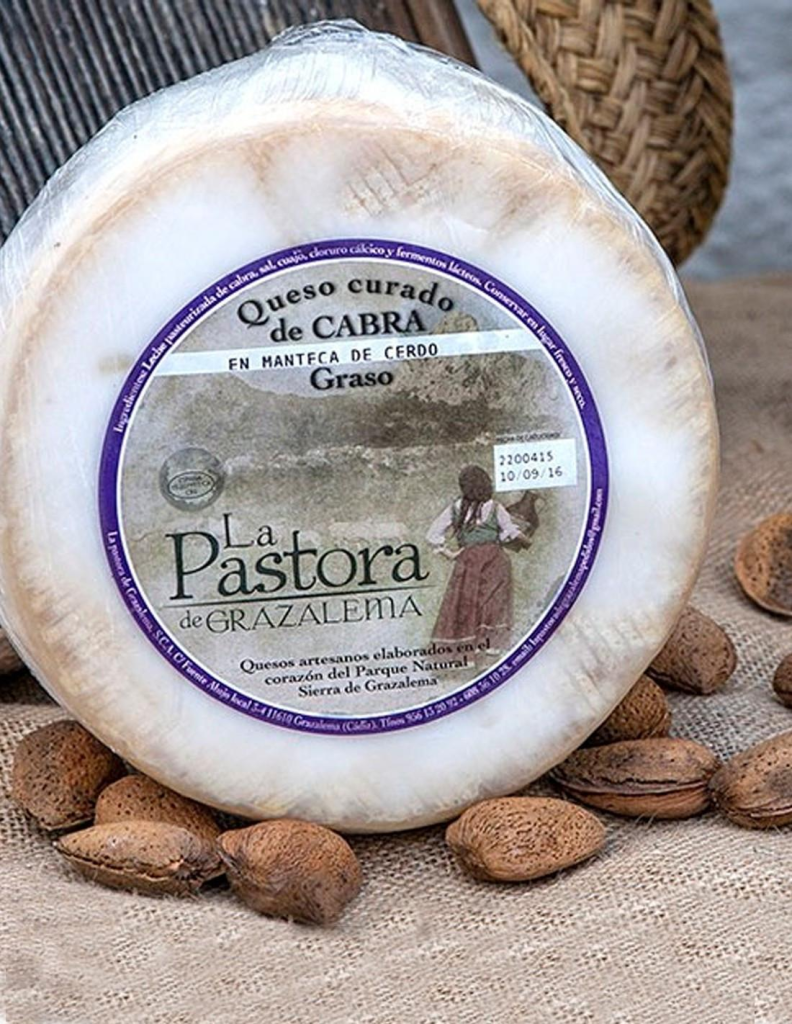
The mountain climate has shaped the local cuisine for generations. In restaurants throughout the village, you’ll find dishes built around lamb, Iberian pork, local mushrooms, and recipes that have been passed down through families. One evening, a plate of Payoyo cheese arrived at the table alongside local olive oil and a glass of wine from nearby Cádiz. The cheese had a rich, slightly nutty flavor that reflected the landscape itself—produced from native goats and sheep raised in these surrounding mountains.
Food lovers will quickly discover why Andalusia is one of Europe’s great culinary destinations. Grazalema is known for hearty mountain cuisine featuring locally raised lamb, Iberian pork, traditional stews, wild mushrooms, and seasonal ingredients gathered from the surrounding countryside.
The village is also famous for its artisan cheeses made from the milk of native Payoya goats and Merina Grazalemeña sheep. These award-winning cheeses pair beautifully with wines from nearby Cádiz, including those produced in the historic sherry region. Local olive oils, honey, cured meats, and preserves provide even more reasons to explore the area’s culinary traditions.
Depending on its age, Payoyo cheese can range from:
- Young cheeses: creamy, mild, slightly tangy
- Semi-cured cheeses: richer and nuttier
- Aged cheeses: firm texture with complex earthy, buttery, and nutty flavors
Many are aged in natural caves or controlled environments that take advantage of the unique mountain climate of the Sierra de Grazalema.
Why is it special?
The Sierra de Grazalema receives some of the highest rainfall in Spain, creating lush mountain pastures that are very different from the dry landscapes many people associate with Andalusia. These conditions help produce exceptional milk from the region’s goats and sheep, giving the cheese its distinctive character.
For food lovers visiting the White Villages, tasting authentic Payoyo cheese is often considered as essential as seeing the famous whitewashed streets and mountain viewpoints of Grazalema itself. It is one of the region’s most prized artisanal products and a favorite souvenir to bring home.What surprised me most was how different Grazalema feels from the larger cities of Andalusia. Seville dazzles with grand monuments. Granada impresses with its history. But Grazalema offers something quieter. Here, the attraction is not a single monument but the experience of being surrounded by mountains, traditions, local life, and streets that invite you to wander without a plan.
Its location makes it remarkably easy to visit. Grazalema sits in the mountains between some of Andalusia’s most popular destinations. It’s approximately 1 hour 45 minutes from Seville, about 2 hours from Málaga, and around 2.5 hours from Granada. For cruise passengers arriving in Cádiz or Málaga, it also makes an excellent excursion into a part of Spain many visitors never see.
Interested in exploring Grazalema, Ronda, and Andalusia’s White Villages with a private guide? Visit SpainAndPortugalVacations.com to learn more about our customized tours and itineraries throughout Spain and Portugal.
Directions to Grazalema:
• From Seville: 115 km (71 miles) – approximately 1 hour 45 minutes
• From Málaga: 135 km (84 miles) – approximately 2 hours
• From Granada: 220 km (137 miles) – approximately 2 hours 30 minutes
• From Cádiz Cruise Port: 120 km (75 miles) – approximately 1 hour 45 minutes
• From Málaga Cruise Port: 135 km (84 miles) – approximately 2 hours