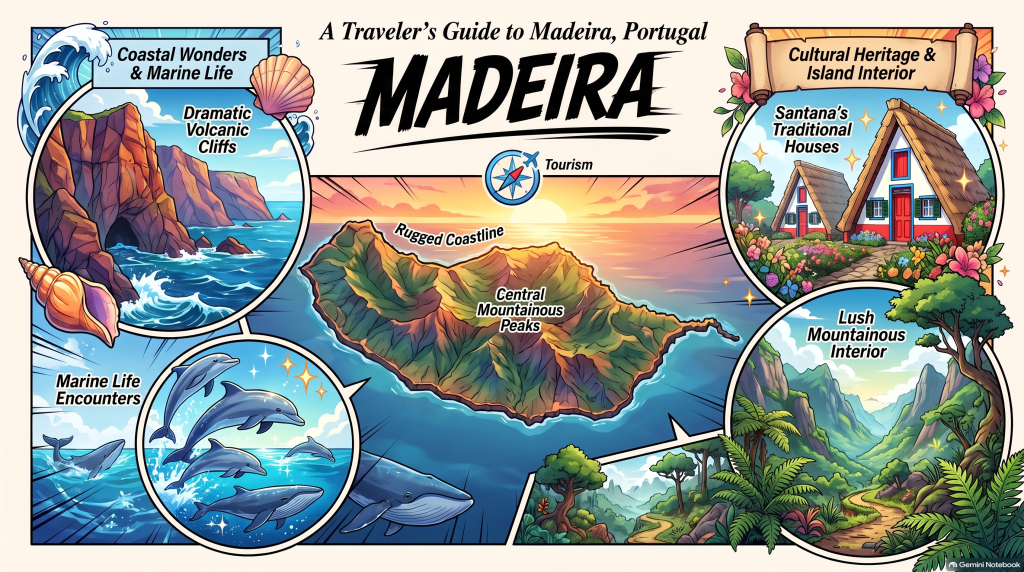
Madeira: History, Tourism and Nature
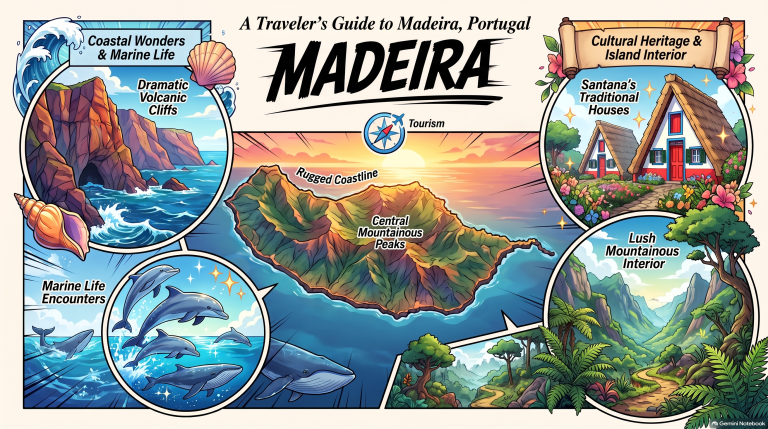
Madeira is an autonomous region of Portugal in the Atlantic Ocean, southwest of mainland Portugal and geographically closer to Africa than to Europe, although politically and culturally part of Portugal and the European Union. The group includes two inhabited islands—Madeira and Porto Santo—plus uninhabited groups like the Desertas and Selvagens.
Madeira’s history is closely connected to Portugal’s Age of Discovery and helps explain why this small Atlantic island became an important center of trade, wealth and cultural exchange. The island was settled by the Portuguese in the early 15th century, during the reign of King John I, at a time when Portugal was expanding its influence across the Atlantic and along the coast of Africa. It was also the major layover for the wealth of spices, gold and commodities brought from India and the Spice Islands to Portugal during the reign of Manuel I in the 16th century
Sugar production brought considerable wealth to the island and helped finance the growth of Funchal as an important Atlantic port. Later, Madeira wine became internationally famous and further strengthened the island’s commercial connections with Europe, the Americas and other parts of the world. This prosperity can still be seen in Madeira’s historic architecture, churches, estates and streets, while its position in the Atlantic continues to make the island an important destination and crossroads between Europe and the wider world.
Today, tourism is an important part of Madeira’s identity, attracting visitors throughout the year with its mild subtropical climate, coastal scenery, food, wine, walking and natural landscapes. Funchal is also an important port of call for cruise ships crossing the Atlantic.
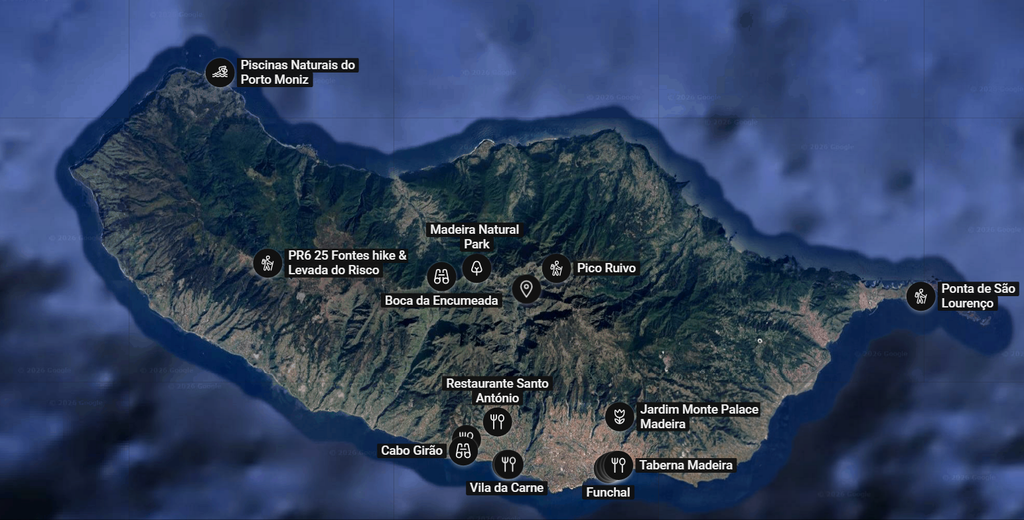
The island is also known for its distinctive flora and fauna, including the ancient Laurisilva, or laurel forest. This prehistoric subtropical forest is one of Madeira’s most important natural treasures and has been recognized as a UNESCO World Heritage Site. Together with the island’s levadas, mountain paths and protected landscapes, the Laurisilva helps make Madeira a destination where nature is not limited to a few isolated attractions but forms an essential part of the travel experience.
For visitors, this combination of history, climate and landscape is what makes Madeira especially rewarding. A relatively short journey can take travelers from the historic streets and waterfront of Funchal to high mountain viewpoints, traditional villages, dramatic Atlantic cliffs and ancient forest. The island also offers opportunities for more active travelers, including mountain biking, canyoning, coastal activities and walking, while those seeking a slower pace can focus on gardens, wine, food and scenic drives.
Start in Funchal
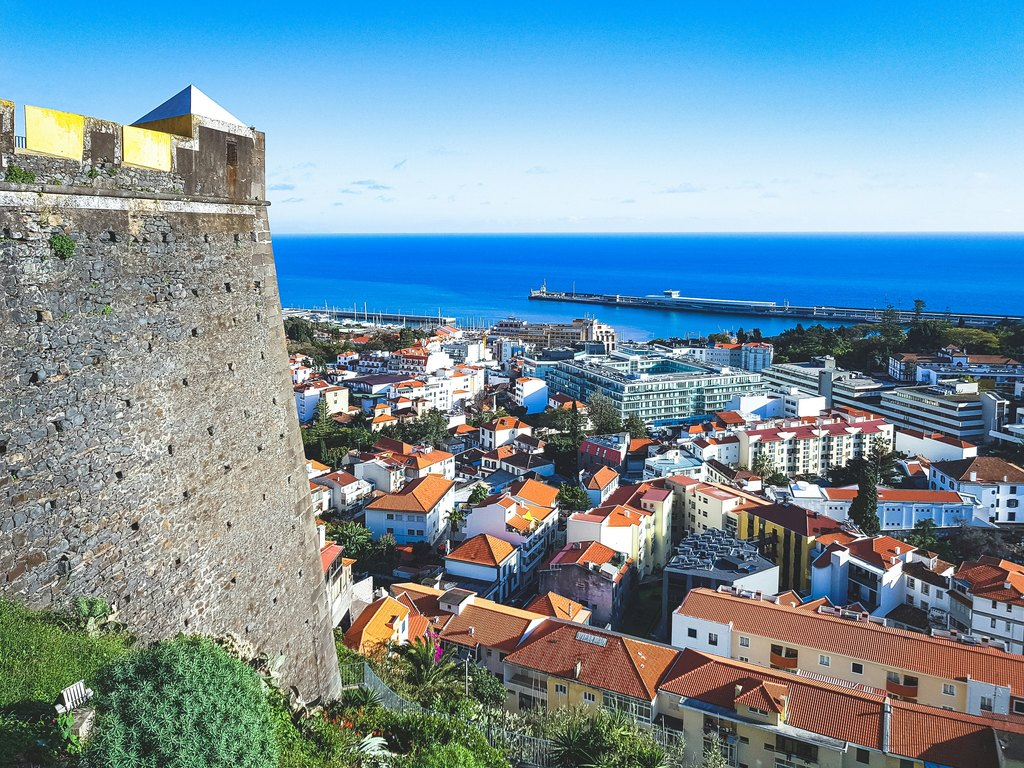
Funchal is the natural starting point for discovering Madeira. Founded after the Portuguese settlement of the island in the 15th century, the city quickly grew into an important Atlantic trading center, first through the lucrative sugar trade and later through Madeira wine. Its historic center still reflects the wealth and importance Funchal gained during Portugal’s Age of Discovery. One of its most important landmarks is the Sé Cathedral, begun in the late 15th century and completed in the early 16th century, when Madeira was at the heart of Portugal’s expanding Atlantic world.
The Sé Cathedral of Funchal is one of Madeira’s most important historic monuments and one of the finest surviving examples of late Gothic and Manueline architecture on the island. Construction began in 1493 during the reign of King Manuel I. Much of the cathedral’s remarkable interior dates from the 16th century, including its magnificent Mudéjar cedar-wood ceiling, Gothic-Manueline altarpiece and carved choir stalls.
The creation of the Diocese gave Funchal an importance far beyond Madeira. Its original jurisdiction was extraordinarily extensive, encompassing the Portuguese lands discovered overseas. In 1533, the diocese was elevated to an archdiocese, becoming for a period the world’s largest metropolitan archdiocese, with jurisdiction extending across Portuguese territories in Africa, Asia, Brazil, and other overseas possessions.
The Old Town of Funchal; Zona Velha in Portuguese.
The historic center and waterfront provide an excellent introduction to Madeira before heading into the countryside. Begin around the cathedral and wander through the older streets toward Avenida do Mar, the marina and harbor, where Funchal’s historic heart meets the Atlantic.
In the Old Town, narrow streets lined with Portuguese calçada pavement lead between colorful façades, small squares, local shops and restaurants. Many of the streets are pedestrian-friendly, making this an enjoyable area to explore at a relaxed pace and stop for a coffee, a glass of Madeira wine or a traditional meal. The city’s mild climate has also made gardens an important part of Funchal’s character.
Lido’s Tavern – A Poncha do Lido: Located near Funchal’s seafront and the popular Lido swimming complex, Lido’s Tavern – A Poncha do Lido is a welcoming place to experience Madeira’s relaxed atmosphere. One of the reasons to stop here is to try poncha, Madeira’s traditional drink made with aguardente de cana (sugar-cane spirit), fresh citrus juice and honey or sugar. Traditionally mixed by hand, poncha has a strong, warming character and is closely associated with Madeira’s culture and social life. Non-alcoholic versions are available and are called ” fruit juice” .
Cable Cars, Gardens and the Traditional Toboggan Ride
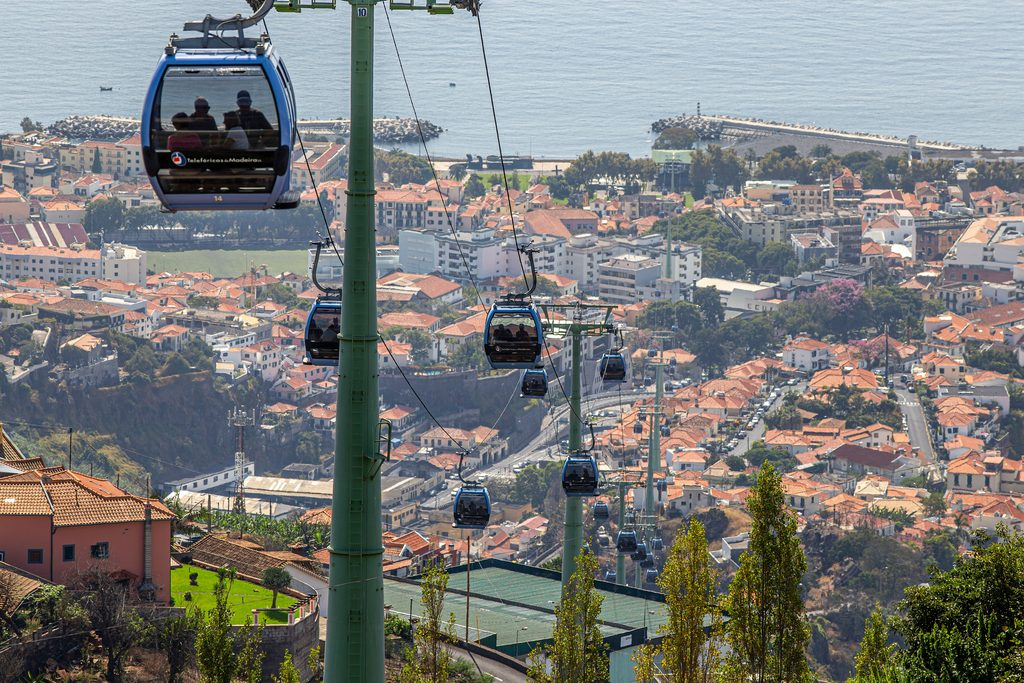
Above Funchal, the parish of Monte offers another perspective on the city and one of Madeira’s best-known traditions. One of the most enjoyable ways to reach Monte is by cable car, rising from the lower part of Funchal to the hills above the city.
The Funchal Cable Car to Monte and the Botanical Gardens ( these are two separate locations) starts at Almirante Reis Park on the seafront in central Funchal and ends at the mountaintop parish of Monte. The start point for both is located on Avenida do Mar, next to the Old Town (Zona Velha) and Almirante Reis Park. The Upper Station (End) is located in Monte, close to the Monte Palace Madeira gardens and toboggan rides. A short walk from here, in Largo das Barbosas, is located the cable car that continues to the Madeira Botanical Garden. Note: the cable cars lines do not form a single continuous direct ride from the city center; you take the first cable car from Funchal up to Monte.
- Funchal-Monte Cable Car (First Route): Starts in the old town of Funchal (Zona Velha) near the seafront and goes up to the Monte parish, right next to the Monte Palace Tropical Garden.
- Botanical Garden Cable Car (Second Route): Starts separately after arriving in Monte (a short walk from the top of the first line) and goes down across the valley directly to the Madeira Botanical Garden.
Monte Palace Madeira, is one of Madeira’s most impressive tropical gardens. Located about 3 kilometers from central Funchal, the garden covers approximately 70,000 square metres on the slopes of Monte. The estate developed from the former Monte Palace Hotel, whose origins date to the early 20th century, and was later transformed into the extensive garden and museum complex seen today.
- The gardens feature exotic plants from around the world and are arranged around ponds filled with colourful koi. Winding paths lead through lush vegetation, past Japanese-inspired gardens, pagodas, Buddha figures, sculptures, and a remarkable collection of historic Portuguese tiles dating from the 17th to 20th centuries. The gardens also contain two permanent museum collections, African Passion and Secrets of Mother Nature. Monte Palace Gardens combines Madeira’s subtropical vegetation with art, history, and carefully designed landscapes. Its location high above Funchal makes it a natural stop when combining the cable car with a visit to Monte and the traditional wicker toboggan ride.
Madeira Botanical Garden
The Madeira Botanical Garden is the perfect continuation of your day after exploring the Monte Palace Tropical Garden, especially since the two sites are directly connected by the scenic Monte/Botanical Garden Cable Car. After experiencing Monte Palace’s Asian-inspired pavilions and tile art, this second stop shifts your focus to a massive 80,000-square-meter scientific collection featuring over 2,500 exotic plant species arranged in famous geometric terraces. Located just down the slope on the historic Quinta do Bom Sucesso estate, it pairs its vibrant cacti, orchids, and indigenous laurisilva forest with sweeping, lower-altitude views of Funchal and the Atlantic Ocean.
Combined Transit & Garden Tickets (Highly Recommended)
If you plan to use the cable cars to travel between central Funchal, Monte, and the Botanical Garden, you can purchase convenient combo packages:
- The Full Loop Combo (€35): Purchased at the main Funchal Cable Car Station by the downtown marina. This includes your round-trip ride up to Monte, the separate Botanical Garden Cable Car link, and entry to the Madeira Botanical Garden. Note: This still does not include Monte Palace admission, which you must buy at the palace gates for €18.
- The Cable Car + Botanical Garden Link (€24): If you are already up in Monte, you can go to the Botanical Garden Cable Car Station and buy a round-trip cable car ticket that includes admission to the Botanical Garden. The information provided was correct when this was written, check for any changes on the official websites with the link provided: https://www.madeiracablecar.com/
Madeira’s Toboggan Wicker Basket Rides
Near the Church of Nossa Senhora do Monte, visitors can experience Madeira’s famous wicker toboggan ride, originally developed as a practical way for residents of Monte to travel downhill toward Funchal. Today, passengers travel in a wicker sled guided and controlled by traditionally dressed carreiros, who steer the sled through the streets using their footwear as brakes.
Travel tip: The toboggan ride is now a popular tourist attraction, and long lines are common during peak hours. Even if you decide not to take the ride, you can watch the carreiros and their sleds from several vantage points. Alternatively, after visiting Monte, you can return to Funchal by cable car and enjoy the views on the way back to the city center. Keep in mind the toboggan rides do not return to the city center!
Madeira Wine and Rural Traditions
Wine is closely connected to Madeira’s history and remains an important part of the island’s culture and landscape. The island is best known for Madeira Wine, a fortified wine produced through a distinctive process of heating and aging that gives it remarkable depth and allows it to remain stable for many years. It ranges from dry styles, such as Sercial, to richer and sweeter styles, including Bual and Malvasia.
For visitors interested in Madeira wine, we highly recommend Blandy’s Wine Lodge which offers an opportunity to discover the island’s wine-making traditions in the heart of Funchal. The Blandy family has been producing Madeira wine for more than two centuries and seven generations, with the wines traditionally aged using the canteiro method and their historic winery houses more than 650 barrels and vats of Madeira wine.
Guided visits take visitors through the winery and explain the production and aging process, followed by wine tastings. The complex also includes the Blandy family museum and the Max Römer Room, decorated with murals by the German artist and the Frasqueira Room, home to some of Blandy’s oldest and rarest Madeira wines. For wine enthusiasts, tastings can include exceptional vintages dating back to the early 20th century, offer a chance to taste a small part of Madeira’s remarkable wine heritage with one of the remaining original families that started the Madeira Wine trade.
https://www.blandyswinelodge.com/
Madeira also produces unfortified table wines, including red, white and rosé wines, made from local and Portuguese grape varieties and the vineyards themselves are part of the experience, often planted on steep terraces carved into Madeira’s volcanic slopes. Some of the most important wine-growing areas are around Câmara de Lobos, about 6 miles (10 km) west of Funchal, where steep terraces provide ideal conditions for varieties including Tinta Negra. On the cooler, wetter north coast, the areas around São Vicente and Seixal, approximately 25 miles (40 km) from Funchal, offer a very different vineyard landscape. These dramatic terraces demonstrate how generations of farmers adapted Madeira’s steep terrain to cultivate grapes. Our clients love their wine tours pared with delicious foods; Join us on extraordinary open air, 4×4 excursion where vineyards, wine tasting, and the Cabo Girão skywalk converge to create an encounter that will leave you breathless and desiring more.
From the City to the Mountains
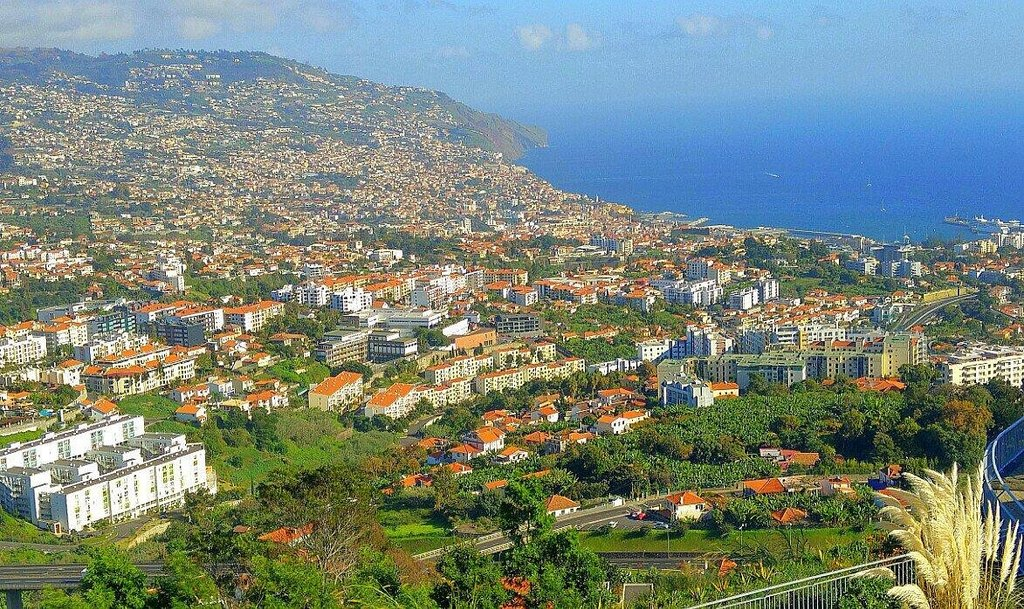
One of the striking features of Madeira is how quickly the landscape changes outside Funchal. A short drive can lead to viewpoints above the city before the roads continue into the mountains and valleys of the island’s interior. Close to Funchal, Pico dos Barcelos miradouro ( pictured) provides views across Funchal and its bay, showing the relationship between the city, the Atlantic and the mountains.
Continuing higher into the interior, the landscape around Eira do Serrado overlooks Curral das Freiras, commonly known as the Nuns Valley which is surrounded by steep mountains and far removed from the coastal environment of Funchal despite being relatively close.
Câmara de Lobos and the South Coast
Located just west of Funchal, Câmara de Lobos is one of Madeira’s best-known fishing communities, where a natural rocky harbor is beautifully framed by steep hillsides and filled with colorful, traditional xavelhas boats. As the island’s very first settlement—founded in the 1420s—this picturesque town is rich in history and famously inspired Winston Churchill, who captured its stunning bay on canvas.
The Cliffs of Eastern Madeira
At the eastern tip of Ponta de São Lourenço, Madeira reveals a very different personality – raw, windswept, and almost otherworldly. Unlike the lush green landscapes that define much of the island, this narrow peninsula is shaped by volcanic forces, its dramatic cliffs and layered rock formations telling a story that stretches back millions of years.
Named after the ship of Portuguese explorer João Gonçalves Zarco – one of the discoverers of Madeira in the early 15th century “Ponta de São Lourenço” carries both geological and historical significance. This was among the first parts of the island seen by explorers, marking the beginning of Madeira’s recorded history under Portuguese navigation during the Age of Discovery.
Today, the peninsula is a protected nature reserve, where hikers follow winding trails along ridgelines overlooking the Atlantic Ocean. The landscape, though arid, is rich in unique flora and fauna, including rare seabirds and hardy plant species adapted to the dry, exposed conditions. The constant trade winds and sweeping ocean views make every step feel like walking at the edge of the world.
Madeira’s High Mountains
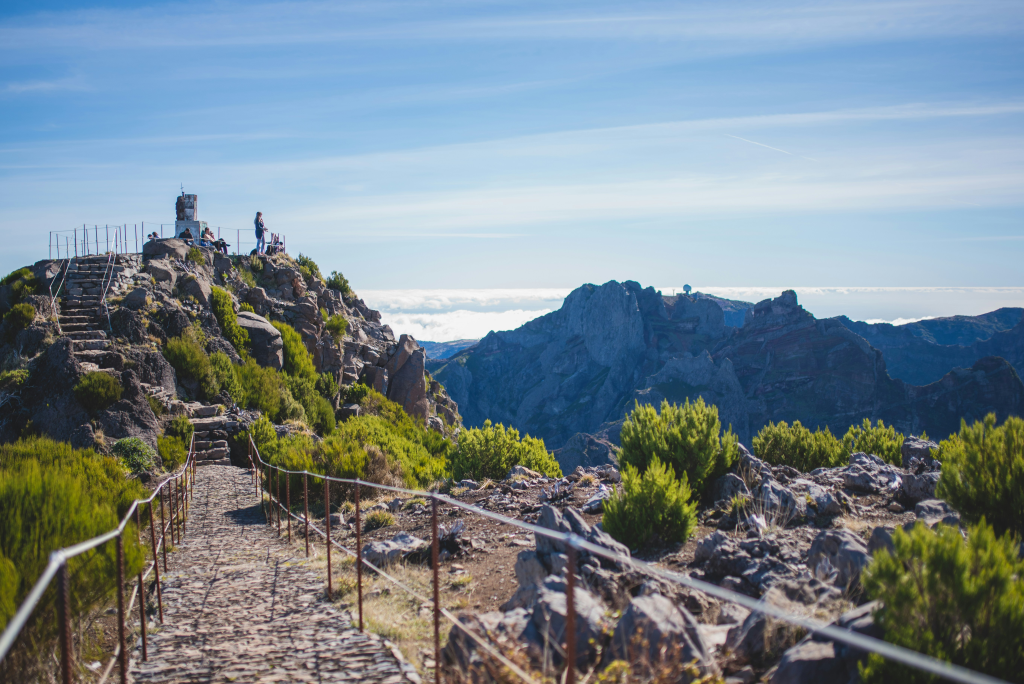
Pico do Areeiro offers another dramatic change in scenery. High above the coast, the landscape is defined by mountain ridges and deep valleys, with walking routes leading toward some of Madeira’s highest peaks. One of the accessible viewpoints is Ninho da Manta, reached along part of the mountain footpath. When the weather is clear, the views are among the most impressive on the island.
Conditions can change quickly, however, and wind, fog and cloud are common at this altitude, which is important to understand because Madeira should not be explored with an overly rigid schedule that might require changing due to weather conditions. A day planned around mountain scenery may change according to the weather, with a lower-altitude walk or coastal route providing a better experience when the peaks are covered by cloud.
Walk Through Madeira’s Levadas
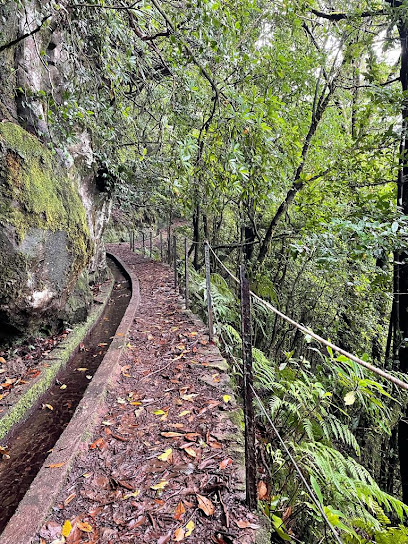
One of the best ways to experience Madeira’s mountains and forests is along its levadas, the island’s historic network of irrigation channels. Built after Portuguese settlement in the 15th century, they carry water from the wetter mountains and northern slopes to the drier agricultural areas of the south, supporting crops such as sugar cane, grapes and bananas.
Carved into mountainsides and cliffs, with tunnels and paths following their route, the network now extends for roughly 3,000 kilometers and remains an important part of Madeira’s agriculture, with many levadas still supplying vineyards, banana plantations and terraces today. For visitors, the paths beside the channels offer a unique way to explore Madeira’s valleys, forests and mountains, often following gentle gradients rather than steep climbs, making levada walks one of the island’s signature outdoor experiences.
Choosing a Levada Walk
Levada walks are found throughout Madeira, and each offers a different experience depending on the landscape, length and level of difficulty. The walks below are spread across different parts of the island, from the western highlands to the northern mountains, giving you an idea of the variety available.
Levada das 25 Fontes, near Rabaçal in the western highlands, is one of Madeira’s best-known walks. The route passes through dense vegetation and follows the levada toward a dramatic collection of waterfalls and springs surrounded by the island’s lush mountain landscape. It is a popular choice for visitors wanting to experience the classic scenery associated with Madeira’s levadas.
On the north side of the island, Levada do Caldeirão Verde, in the municipality of Santana, provides a more adventurous experience. The route travels through the Laurisilva forest and along dramatic mountain slopes, passing through several tunnels before reaching the impressive Caldeirão Verde waterfall. Good footwear and a headlamp are recommended for this type of walk.
For a quieter experience, Levada dos Cedros, near Fanal in the municipality of Porto Moniz, passes through one of the island’s most atmospheric areas of laurel forest. Dating from the 17th century, it is among Madeira’s older levadas and offers the opportunity to walk through a landscape where ancient trees, moss-covered slopes and mist are often part of the experience.
These are only a few examples of the levada walks available across Madeira. There are routes for experienced hikers as well as shorter walks suitable for visitors who simply want to experience the landscape at a relaxed pace. When choosing a walk, consider the distance, elevation, trail conditions, exposure to heights and whether tunnels are involved, as conditions can vary considerably between routes. Our travel services can arrange private guided hikes and transportation from Funchal or other locations in Madeira, helping you select a levada walk that matches your interests, fitness level and experience.
Hire a Private Guided Hike ( for beginners and experts).
Contact Us for Private Hiking Tours: We arrange private levada walks with transportation from Funchal or other towns in Madeira, allowing you to enjoy the island’s remarkable waterways and landscapes at a pace that suits you, without tackling a challenging hike independently,
Discover the Laurisilva Forest
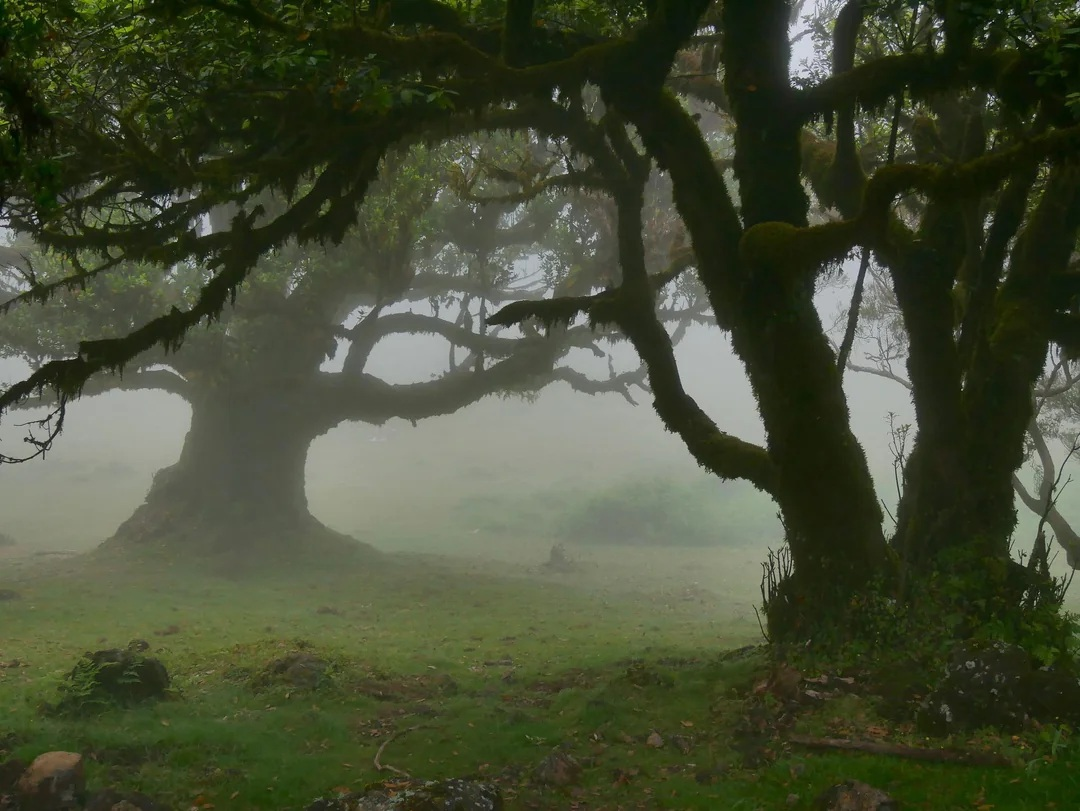
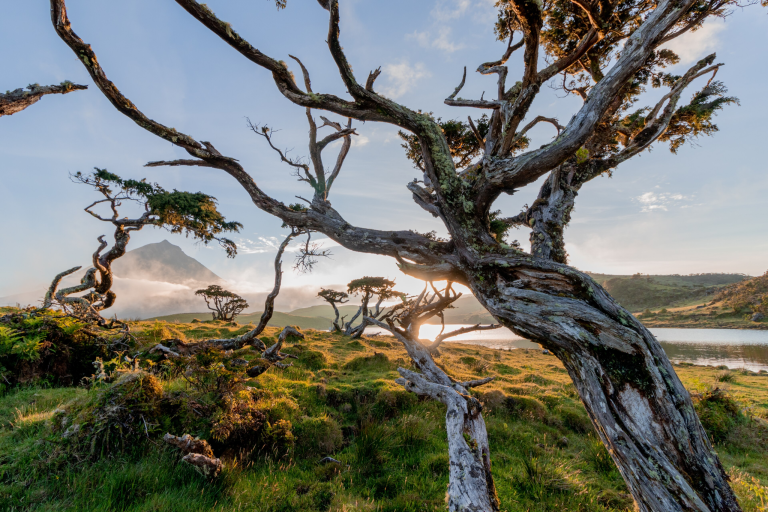
The Laurisilva (in English, laurel trees) is spread across Madeira’s rugged, mountainous interior and northern slopes, making the terrain an important part of the hiking experience. The Laurisilva Forest is about 20 million years old, a surviving remnant of the ancient laurel forests that once covered large areas of southern Europe. Today, it covers much of Madeira’s mountainous interior and northern slopes and is recognized as a UNESCO World Heritage Site. If you are fortunate, the weather will be misty to allow scenes like this, which make this an otherworldly landscape.
For a day trip from Funchal, several Laurisilva areas can be reached in roughly 30 minutes to 1.5 hours by car, depending on the trail and access point. The forest is distinctly mountainous rather than flat, spreading across steep slopes, deep V-shaped valleys, high plateaus, waterfalls, and dramatic ravines. This varied terrain makes it one of Madeira’s best regions for hiking, although some levada walks follow relatively level paths along the contours of the mountains, offering easier access through the otherwise rugged landscape.
Whale and Dolphin Excursions
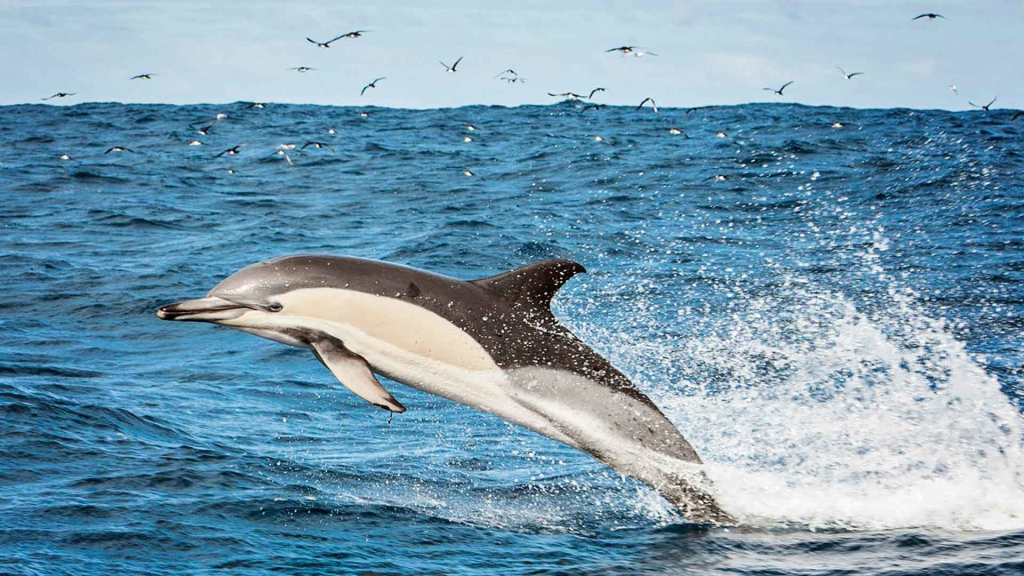
Madeira is one of Europe’s excellent destinations for whale and dolphin watching. The island’s location in the Atlantic places it close to deep ocean waters where dolphins and several species of whales can be seen throughout the year. Most excursions depart from Funchal, although boats also operate from other locations around the island. We recommend a VIP Private Tour with fewer persons onboard and a more personalized service.
Dolphins are among the most frequently encountered animals, including common and Atlantic spotted dolphins, while sightings can also include sperm whales, pilot whales and various species of baleen whales. Because these are wild animals, sightings and species cannot be guaranteed, but the waters around Madeira offer excellent opportunities to observe marine life in its natural environment. Many excursions will offer another ride should you not see dolphins or whales during your time on the sea; and remember to wear suitable clothing as you’ll be on the Atlantic Ocean.
Plan Your Madeira Journey
Contact Spain & Portugal Vacations to begin planning your Madeira trip. We arrange private tours, hikes, transportation, and experiences throughout the island, creating a trip that combines the places you want to see with the experiences you want to enjoy.